Alopex Case Study
Moto Aggregate (Mobile App Development)
Moto Aggregate + Alopex
Moto Aggregate: Bringing Motorsports Content Together
Moto Aggregate is the brainchild of Alopex Director of Development and Partner Steven Loyer. Built as a custom React Native application for iOS, Android, and the web, the project started from an idea that dates back to 2012 when Steven was working with MotoXAddicts.com.
As an avid motocross and supercross fan, Steven found himself doing the same thing every day, checking multiple websites for news, YouTube for videos, podcast apps for interviews and shows, social media for updates, and various timing and results services during race weekends. The content existed, but it was spread across dozens of platforms and apps.
The idea behind Moto Aggregate was simple. What if all of that content lived in one place and users could decide exactly what they wanted to see?
The Goal
The goal was never to replace the content creators, publications, podcasters, and YouTube channels that make the sport great. Instead, it was to create a platform that helps fans discover and consume more of that content without constantly jumping between apps and websites.
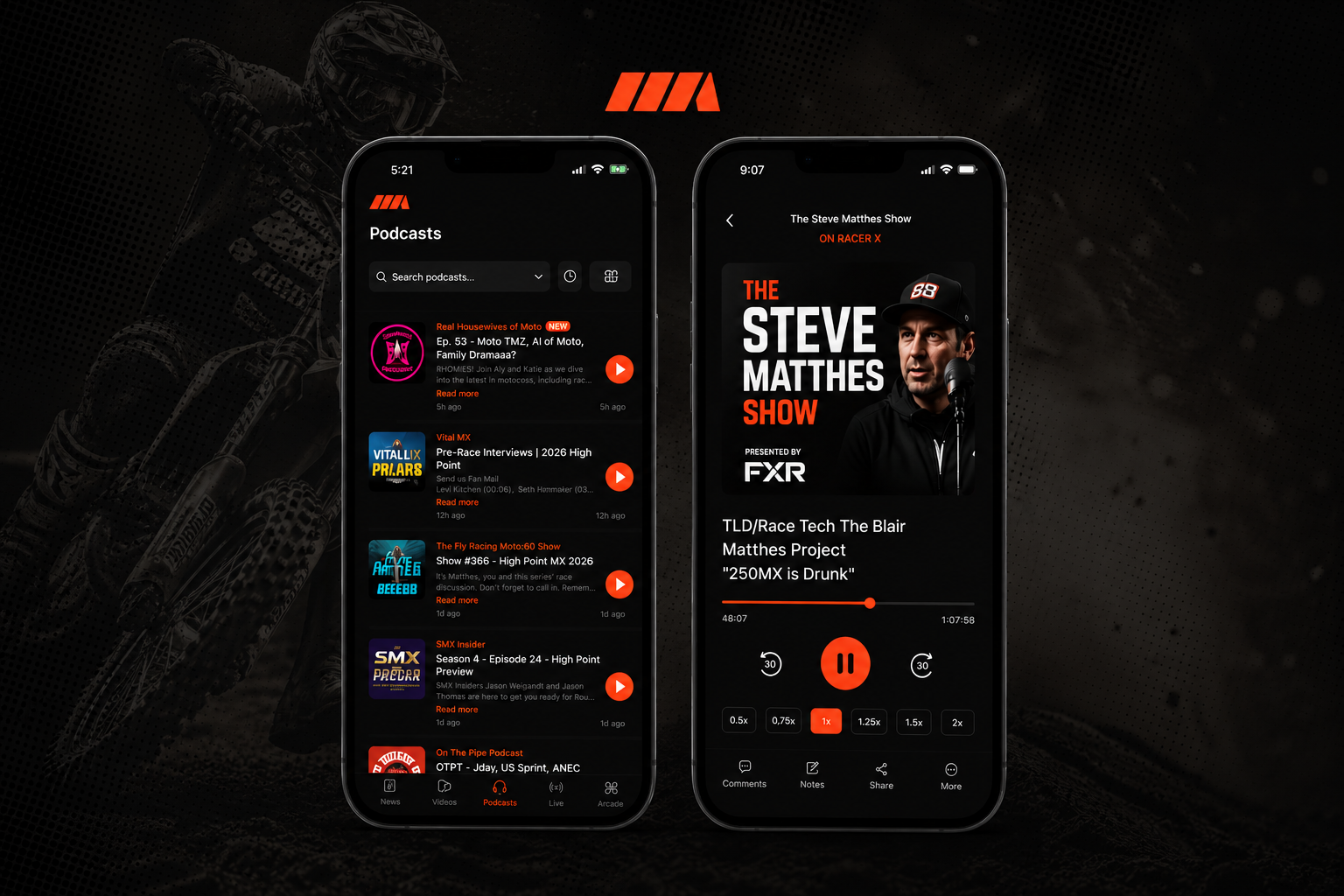
Users can build personalized feeds based on their interests, follow specific media outlets, subscribe to podcasts, watch videos, receive notifications, and keep up with race schedules, results, and live timing data from a single application.
Building the Front-End
Moto Aggregate was built using React Native, allowing a single codebase to power iOS, Android, and web experiences. Features can be developed once and deployed everywhere while still delivering a native experience on mobile devices.
The application includes:
- Personalized content feeds
- Push notifications
- Podcast playback
- YouTube integration
- Subscription management
- User accounts and preferences
- Live timing and event integrations
- Content discovery tools
- Saved content and listening progress
- Premium features managed through subscriptions
As the project evolved, personalization became one of its biggest strengths. Users can choose not only what appears in their feed, but also which podcasts, YouTube channels, news outlets, and race events generate notifications.
The Real Challenge
While the front-end application is what users interact with every day, the real challenge was building the infrastructure behind it.
Although Moto Aggregate started as a personal project, it quickly became a showcase of many of the same technical challenges we solve for clients every day. Behind the application are custom APIs, third-party integrations, real-time data processing, user authentication, subscriptions, push notifications, analytics, content aggregation, and cloud infrastructure designed to scale.
Many of the lessons learned building integrations and data-driven solutions for clients like Bailey's Furniture and MTA Solutions carried over into Moto Aggregate. While the industries are completely different, the underlying challenge is often the same. Data lives in multiple systems and needs to be collected, processed, organized, and delivered in a way that is useful to the end user.
Moto Aggregate continuously collects and processes:
- RSS feeds
- Podcast feeds
- YouTube content
- Race schedules
- Race results
- Live timing data
- User preferences
- Subscription data
- Analytics and engagement data
Rather than simply displaying content from external sources, the platform processes, categorizes, and organizes information before delivering it to users through custom APIs and personalized feeds.
Under the Hood
While users see a mobile app, the majority of the work happens behind the scenes.
Moto Aggregate continuously collects content from dozens of sources, processes it, categorizes it, and delivers it through a custom API layer designed specifically for the application.
React Native
React Native powers the user experience across iOS, Android, and the web from a single codebase. This allows new features to be released across all supported platforms without maintaining separate applications.
Expo
Expo provides access to native device functionality including push notifications, deep linking, permissions, and deployment workflows. This allowed development to focus on features rather than maintaining separate platform-specific implementations.
Next.js
Next.js serves as the primary API layer for the platform. It handles content delivery, authentication requests, user preferences, podcast progress tracking, subscription validation, notification settings, and communication between the application and backend services.
Node.js
Several Node.js services run continuously in the background processing content from external sources. These services ingest RSS feeds, podcast feeds, YouTube channels, race schedules, and timing data before transforming everything into a consistent structure that can be consumed by the application.
Supabase
Supabase serves as the backbone of the platform, handling authentication, user accounts, database management, feed preferences, notification settings, saved content, podcast progress, and application storage.
RevenueCat
RevenueCat manages subscriptions across Apple App Store and Google Play ecosystems. This allows premium features to be managed from a single system while handling platform-specific billing requirements behind the scenes.
PostHog
PostHog is used throughout the platform to track user behavior and feature adoption. Everything from onboarding completion rates and feed engagement to podcast listening habits and notification preferences can be analyzed, helping guide future development decisions.
Content Aggregation & Processing
Unlike many content aggregation platforms that simply embed content from external sources, Moto Aggregate actively ingests and processes information before presenting it to users. News articles, podcasts, videos, race schedules, and timing data are categorized and organized into personalized feeds based on user interests.
Notification Infrastructure
One of the more complex features of the platform is the notification system. Users can choose not only what appears in their feed, but also which creators, podcasts, YouTube channels, and race events generate notifications. Custom logic determines who receives notifications and when, helping users stay informed without becoming overwhelmed.
Live Timing & Race Data
Moto Aggregate also integrates race schedules, results, and live timing data. Custom processing services collect and organize race information, allowing fans to follow events from a single platform rather than jumping between multiple websites and services.
From Personal Project to Production Application, to Show Piece
Like many side projects, Moto Aggregate started with a simple goal. Solve a problem for one person.
As new features were added, including podcast playback, subscriptions, content aggregation, live timing, notifications, analytics, and personalized feeds, it became clear the platform had the potential to serve a much larger audience.
What began as a way to organize Steven's own motorsports content eventually became a production application available across iOS, Android, and the web with a growing user base.
Looking Forward
Moto Aggregate continues to evolve as new ideas, integrations, and features are added. More importantly, it serves as a real-world example of the type of software Alopex can build.
Whether it's a custom mobile application, React Native development project, iOS application, Android application, custom API integration, subscription platform, or cloud-based software solution, the same principles apply. Build something useful, build it efficiently, and build it to last.
If you're considering custom mobile app development, React Native development, iOS app development, Android app development, or a project that requires custom APIs and third-party integrations, we'd love to talk about it.
Steven Loyer, Director of Development & Partner, Alopex
"This was always something I wanted to build for myself. What surprised me was how much experience from client projects found its way into the application. The APIs, integrations, data processing, notifications, and user experience challenges weren't all that different from the work we'd already been doing for years. The difference was that this time I got to build something I wanted to use every day."
Take Moto Aggregate for a test ride!
Download the App on the Apple Store and Google Play Store and see it for yourself!


